To use a reference for mixing means to have a basis of the type of mix that your song will require. For example, when mixing electronic music, the general equalisation of the song has the low ed frequencies and the high end frequencies boosted slightly in comparison to the mids, as for dance music especially, there is always a heavy emphasis on the kick, which creates the whole rhythm, and emphasis on the high hat frequencies which create the groove. These two in combination allows the mid end melodies and harmonies from the instruments to almost lull about in the background of the song. Having an electronic song as reference allows you to get more comfortable with how different songs from different genres all have different mixes, and he’s you realise there is no real ‘correct’ mix, but instead just different mixes fr different occasions.
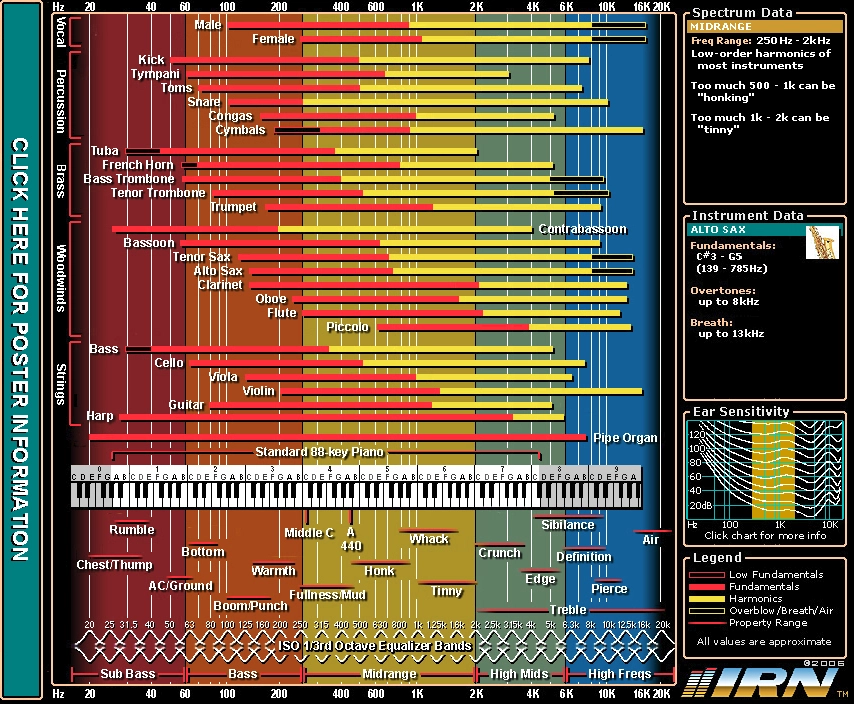
An example of reference material that might be suitable for production is frequency charts. Frequency charts show the frequency range of common instruments and sounds sources, for example the female voice, of the bassoon. It will help you ballpark a good starting point for the equalisation. It will also help to point out where some of the muddiness in a mix may be rooted from. It will show the overlaps between instruments in a specific frequency range, that might be smudging each other out. This reference is more suitable for beginners, but when getting into advanced mixing with countless instruments, this becomes a lot less helpful.